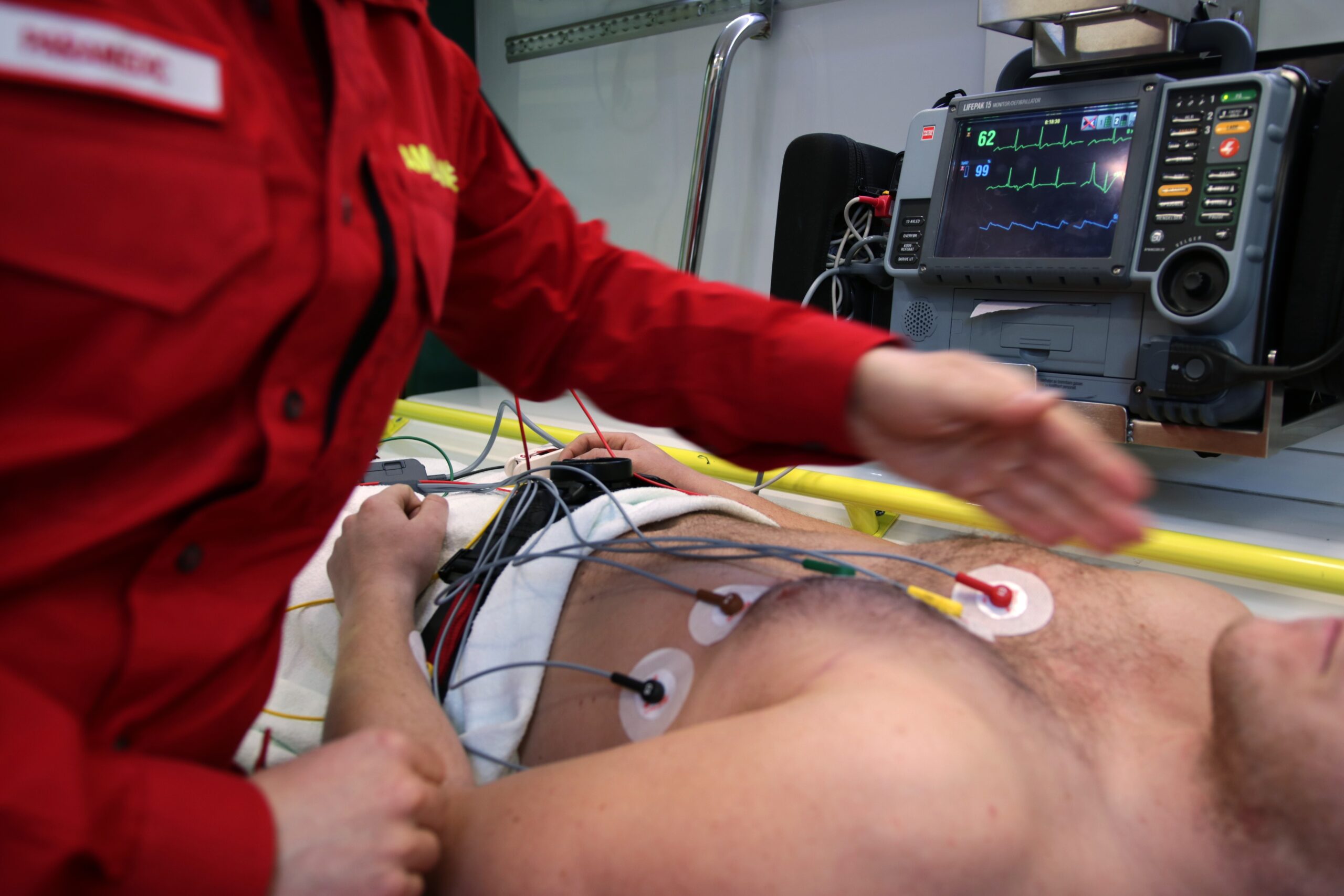
Researchers at Wake Forest University School of Medicine have developed an artificial intelligence tool that can identify hard‑to‑detect forms of heart dysfunction using a standard electrocardiogram — a breakthrough that could make early screening far more accessible. The study, published in the Journal of the American Heart Association, demonstrates that AI can spot electrical patterns in the heart that clinicians often miss, including a type of heart failure that frequently goes undiagnosed in routine care.

A Major Step Toward Earlier Detection
Heart failure affects more than 6 million Americans and remains one of the country’s leading causes of hospitalization and death. Early detection is critical, yet many patients do not receive specialized imaging tests such as echocardiograms until symptoms become severe.
The new AI model aims to bridge that gap by analyzing ECG data, one of the most common and inexpensive diagnostic tools in medicine. According to the research team, the model can identify three forms of heart dysfunction: reduced ejection fraction, mildly reduced ejection fraction, and heart failure with preserved ejection fraction (HFpEF), a condition that is notoriously difficult to detect early.
“This is a major step forward in how we can use everyday clinical tools to catch heart failure earlier,” said Oguz Akbilgic, Ph.D., corresponding author and professor of artificial intelligence in the Department of Cardiovascular Medicine.
Wearable‑Compatible Screening
One of the study’s most notable findings is that the AI model performed well even when using data from a single ECG lead, the same type of measurement captured by many consumer wearable devices. Although the model has not yet been tested on wearable‑generated data, researchers say the results suggest future potential for at‑home screening.
The research team trained the model using more than 1 million ECGs from Atrium Health Wake Forest Baptist and validated it with an additional 72,000 ECGs from the University of Tennessee Health Science Center. Both the 12‑lead and single‑lead versions performed similarly, with the full 12‑lead model showing particularly strong accuracy in identifying reduced ejection fraction.
Strong Performance Across Populations
The model also showed encouraging results in pediatric patients, performing as well as or better than previously studied tools, though researchers noted that the pediatric sample size was relatively small. Importantly, the AI system generalized well across demographic groups, suggesting broad clinical applicability.
Researchers are now piloting the tool in a family medicine clinic to evaluate how it performs in real‑world care settings. The goal is to determine whether the AI can help clinicians identify patients who need further evaluation and how its use might affect resource allocation.
A Path Toward More Accessible Heart Care
While the technology is still in its early stages, the findings point toward a future in which AI‑enhanced ECGs could help clinicians catch heart dysfunction earlier and more efficiently — potentially reducing hospitalizations and improving outcomes for millions of patients.