Artificial intelligence may run in the cloud, but the infrastructure powering it is decidedly physical.
As technology companies pour billions into new AI data centers, the competition for faster chips and larger computing clusters is creating another race behind the scenes: finding enough electricity to power them.

New projections from the International Energy Agency show just how quickly the equation is changing. Global electricity consumption from data centers grew 17% in 2025, while electricity used specifically by AI-focused data centers surged 50%.
The IEA expects worldwide data-center electricity demand to nearly double, from about 485 terawatt-hours in 2025 to 950 TWh by 2030. AI-focused facilities are projected to grow even faster, roughly tripling their electricity consumption during the same period.
That means the AI race is increasingly becoming an energy race.
Data Centers Are Becoming Major Power Consumers
The impact could be particularly pronounced in the United States.
The Electric Power Research Institute’s 2026 Powering Intelligence report estimates that U.S. data centers could consume between 9% and 17% of the nation’s electricity by 2030, compared with roughly 4% to 5% today.
EPRI estimates U.S. data centers used about 177 to 192 TWh of electricity in 2024. By 2030, consumption could reach between 380 and 790 TWh, depending on how many projects under development actually come online. Its latest projections are about 60% higher than estimates the organization produced just two years earlier.
AI isn’t responsible for all of that demand. EPRI estimates AI workloads currently account for about 15% to 25% of data-center electricity use. But that portion is expanding rapidly as companies deploy larger AI models and increasingly powerful computing clusters.
The Bottleneck May Be the Grid
Building more data centers is one challenge. Connecting them to an electrical system capable of supporting massive new loads is another.
The issue has become significant enough to draw action from federal regulators.
In June, the Federal Energy Regulatory Commission ordered six regional grid operators to justify or reform procedures governing how large electricity users—including data centers—connect to the transmission system.
A month later, the U.S. Department of Energy released its draft 2026 National Transmission Needs Study, warning of a pressing need for additional transmission infrastructure as electricity demand rises from data centers, manufacturing and other large industrial users.
The problem isn’t simply generating enough electricity. Power must also be delivered to the right place, at the right time, through transmission and distribution infrastructure capable of handling enormous loads.
AI Creates a Different Kind of Power Demand
AI workloads can also behave differently from traditional computing.
According to the IEA, training models and running AI applications can produce large and rapid swings in electricity demand. That makes technologies such as battery storage increasingly important for maintaining reliable power supplies. The agency estimates data centers could install 20 to 25 gigawatts of battery storage worldwide by 2030.
At the same time, growing demand is putting pressure on the supply chain for transformers, power electronics and other equipment necessary to connect giant computing facilities to the grid.
AI’s Next Constraint May Not Be Chips
For much of the AI boom, computing power has been measured in GPUs.
Increasingly, it may also have to be measured in megawatts.
Companies can design faster processors and build larger models, but none of them operate without electricity. As AI infrastructure expands from individual data centers to enormous multi-building computing campuses, access to power, transmission capacity and grid connections could become just as strategically important as access to advanced chips.
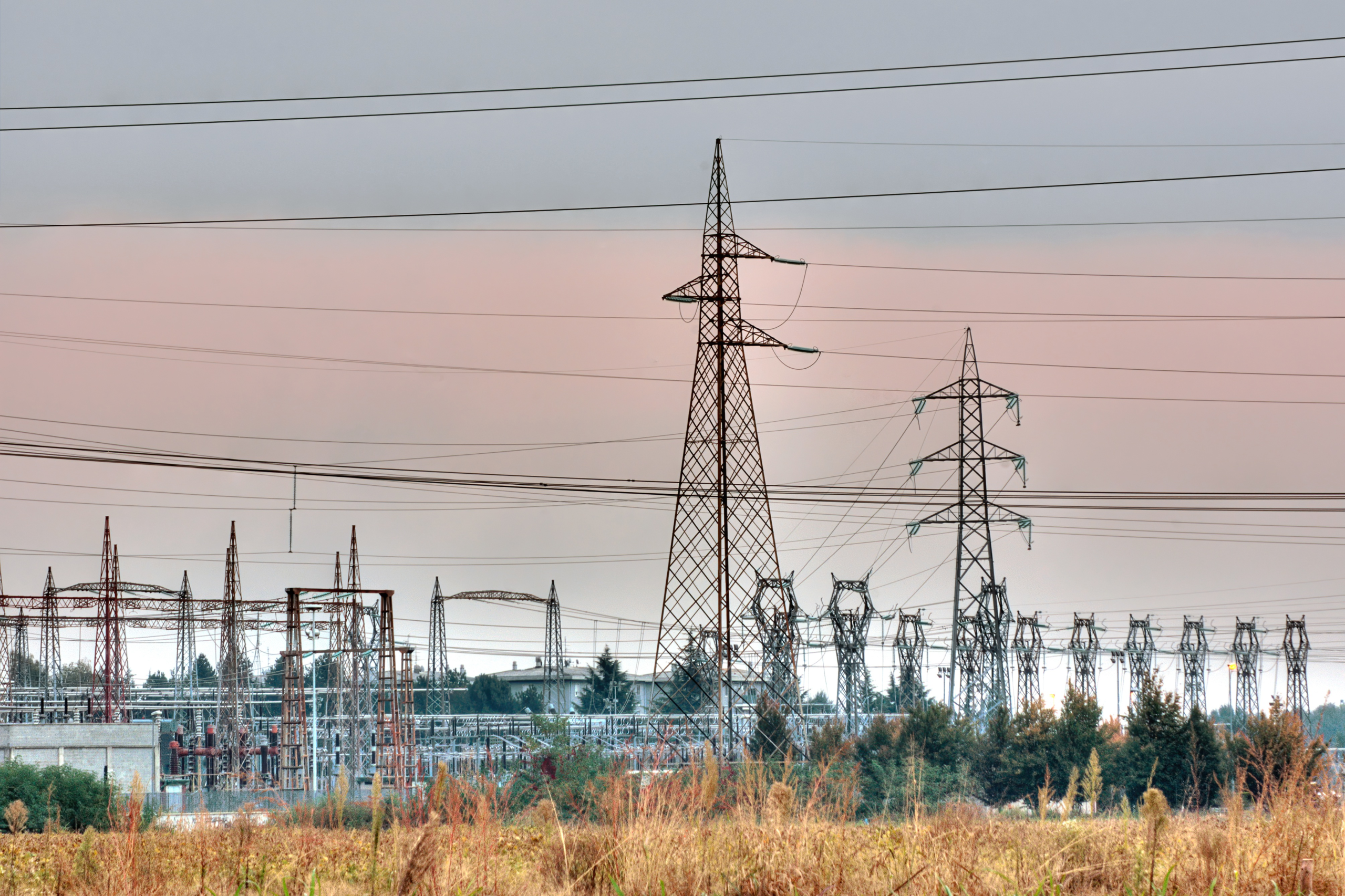
The next phase of the AI race may therefore be fought partly in semiconductor fabs and research labs—but also at substations, power plants and along transmission lines.