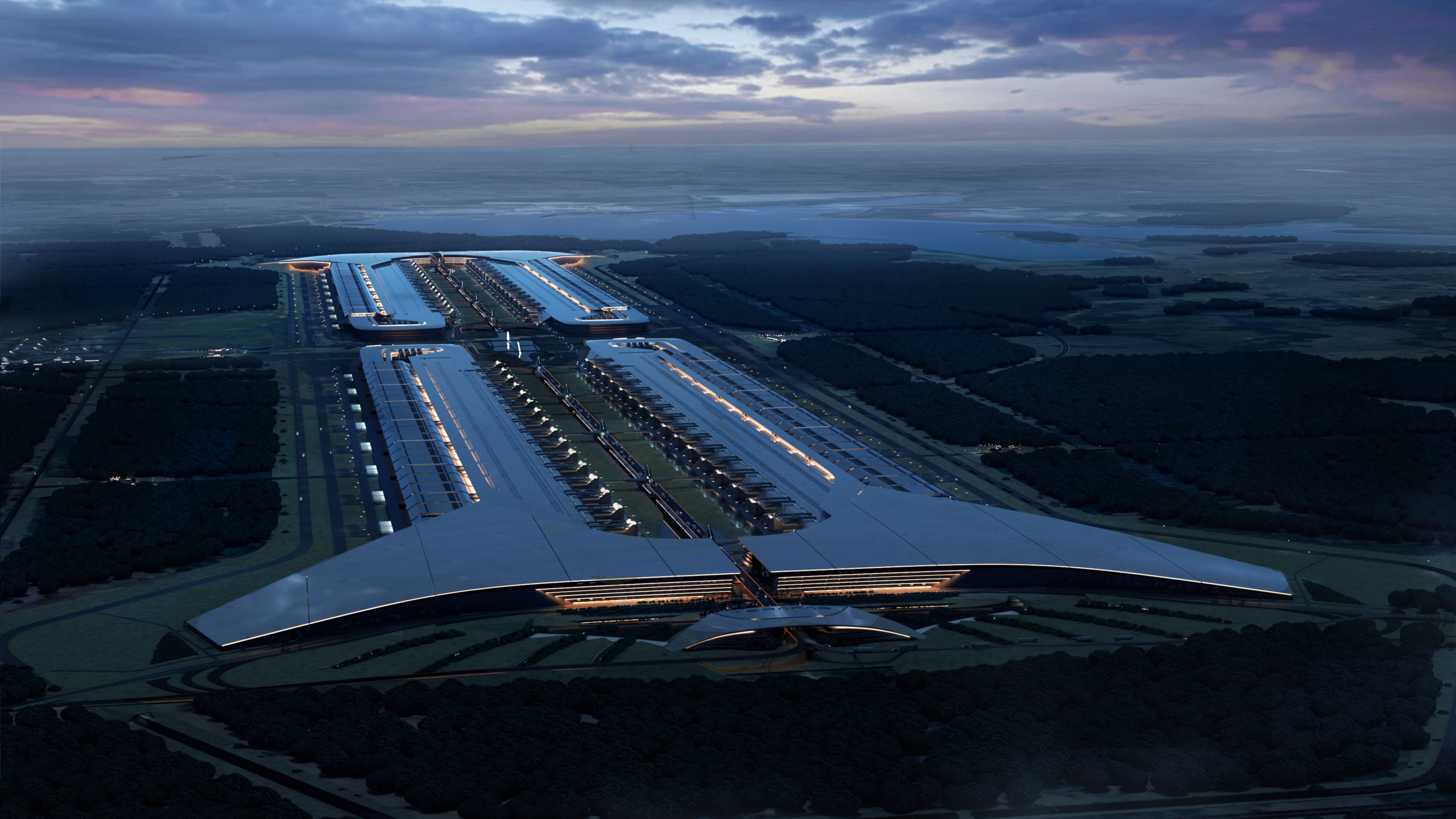
The Terfab buildout—an ambitious expansion of terrestrial fabrication and launch‑support infrastructure—has quietly become one of the most consequential space‑industry projects underway in the United States. While overshadowed by headline‑grabbing rocket launches and satellite constellations, Terfab represents the less glamorous but absolutely essential backbone of modern aerospace: the facilities, supply chains, and manufacturing capacity that make rapid iteration and high‑cadence missions possible.
Industry analysts say the buildout marks a shift from boutique, high‑precision fabrication toward scalable, industrialized production. In other words, the space sector is moving from craft to mass manufacturing, and Terfab is the factory floor.
Why Terfab Matters Now
The timing is no accident. Demand for launch services, spacecraft components, and orbital infrastructure has surged. Companies are racing to deploy next‑generation broadband constellations, defense agencies are investing heavily in resilient space architectures, and commercial players are pushing into lunar logistics.
This acceleration has exposed a bottleneck: the U.S. lacks sufficient domestic fabrication capacity for critical aerospace hardware. Terfab aims to close that gap.
Key goals of the buildout include:
- High‑volume production of structural components and avionics
- Rapid prototyping for emerging mission profiles
- Integrated testing facilities to shorten development cycles
- Supply‑chain redundancy to reduce reliance on foreign manufacturing
The result is a more resilient industrial base—one capable of supporting both commercial ambitions and national security priorities.

A New Model for Space Manufacturing
Unlike traditional aerospace facilities, Terfab is designed around modularity. Instead of siloed production lines, the buildout features flexible bays that can be reconfigured for different programs. This allows manufacturers to pivot quickly between spacecraft buses, propulsion systems, and payload assemblies.
Automation also plays a central role. Robotics handle precision welding, composite layups, and repetitive inspection tasks, freeing human engineers to focus on design and integration. Early internal reports suggest that some production cycles have already been cut by more than half.
The buildout’s digital backbone is equally important. Real‑time telemetry from fabrication tools, AI‑driven quality control, and integrated logistics software create a closed feedback loop between design and manufacturing. In practice, this means fewer errors, faster iteration, and lower costs.
Economic and Regional Impact
Local officials say the Terfab expansion is already reshaping regional economies. New fabrication hubs bring high‑skill jobs, supplier networks, and infrastructure investment. Workforce development programs—often built in partnership with community colleges and engineering schools—are emerging to meet demand for technicians and advanced‑manufacturing specialists.
The ripple effects extend beyond aerospace. Industries such as robotics, materials science, and industrial automation benefit from shared innovation and procurement pipelines.
The Road Ahead
The Terfab buildout is still in its early phases, but its trajectory is clear. As launch providers push toward higher cadence and more complex missions, the need for robust, scalable fabrication capacity will only grow. Terfab positions the U.S. to meet that demand—and to compete globally in an increasingly crowded space economy.